Liverpool Tree Removal & Pruning Guidelines
Council rules for Protected Trees, removal permits, exemptions and pruning
Liverpool City Council protects trees that meet its defined size criteria, and approval is generally required before removing, pruning, damaging or otherwise carrying out works to a Protected Tree. This guide explains which trees are protected, what is exempt, what minor pruning can be done without approval, and when an AQF Level 5 Arborist Report may be needed.
Planning a Development Application rather than a standalone tree removal? Tree removal linked to a DA is assessed differently. See the Liverpool Development Tree Compliance Guide instead.
Do I Need Council Approval to Remove a Tree in Liverpool?
Generally, yes, if the tree meets Liverpool City Council's definition of a Protected Tree and no exemption applies.
Liverpool's Tree Policy states that a person must not ringbark, cut down, fell, uproot, kill, burn, prune, top, lop, remove, injure, poison or wilfully destroy a Protected Tree without Approval. All trees on public land are treated as protected regardless of size, age or species.
Before removing a tree on private property, establish whether it meets Council's Protected Tree definition, whether an exemption applies (including species exemptions, the dead-branch or dead-tree provisions, or the imminent-risk provision), whether heritage listing affects the property, and whether the proposed work is standalone removal or linked to a Development Application. The two are assessed on different pathways.
Do not assume a tree can be removed simply because it is on your property.
What Is a Protected Tree in Liverpool?
Under Liverpool City Council's Tree Policy (adopted 10 December 2024), a tree is a woody perennial plant meeting any one of the following criteria:
- greater than 5 metres in height; or
- trunk diameter of at least 140mm measured 1.4 metres above ground; or
- canopy spread greater than 4 metres.
Meeting any single threshold is enough. A tree does not need to satisfy all three.
A Protected Tree is a tree meeting this definition on Private Land, unless listed as an exempt species, or any tree at all on Public Land, irrespective of size or species. Do not remove or prune a street, park or Council-managed tree without the appropriate authority.
What Trees or Work May Be Exempt?
Approval is not required for trees on Private Land in several specific circumstances:
- pruning branches within one metre of power lines servicing the property;
- removing dead branches;
- work to a tree listed on Council's Exempt Species List, or identified as a Priority Weed for the Liverpool LGA on the NSW WeedWise website; and
- qualifying work under the NSW Rural Fire Service 10/50 Code within a designated 10/50 vegetation entitlement clearing area.
These species and vegetation-clearing exemptions apply to Private Land only, and do not apply to heritage-listed trees, heritage-listed properties, or Heritage Conservation Areas.
Liverpool's Exempt Species List
Because species identification matters, and several exempt species closely resemble protected ones, do not remove a tree based only on its common name or appearance if you are uncertain.
| Column A | Column B |
|---|---|
| Cootamundra Wattle | Silky Oak |
| Western Australian Golden Wattle | Norfolk Island Hibiscus |
| Tree of Heaven | Large Leafed Privet |
| Cotoneaster | Small Leafed Privet |
| Chinese Hackberry | African Box Thorn |
| Hackberry | African Olive |
| Camphor Laurel | Prickly Pear |
| Leighton Green Cypress | Parkinsonia |
| Golden Cypress | Poplars |
| Kei Apple | Mesquite |
| Cockscomb Coral Tree | Black Locust |
| Coral Tree | Willows |
| Rubber Tree | Umbrella Tree |
| Honey Locust | Dwarf Umbrella Tree |
| Queen/Cocos Palm | |
| Athel Pine | |
| Rhus Tree | |
| Karoo Acacia | |
| Prickly Acacia |
Also exempt: edible fruit trees under 10 metres in height, excluding Lilly Pillies, as Syzygium and Acmena species are specifically not covered by this exemption, and White Cedar under 10 metres.
Not sure whether your tree is exempt? Send us photographs and the property address and we can help determine whether an arborist inspection is appropriate. See also the Liverpool Exempt Tree List & Replacement Planting Guide.
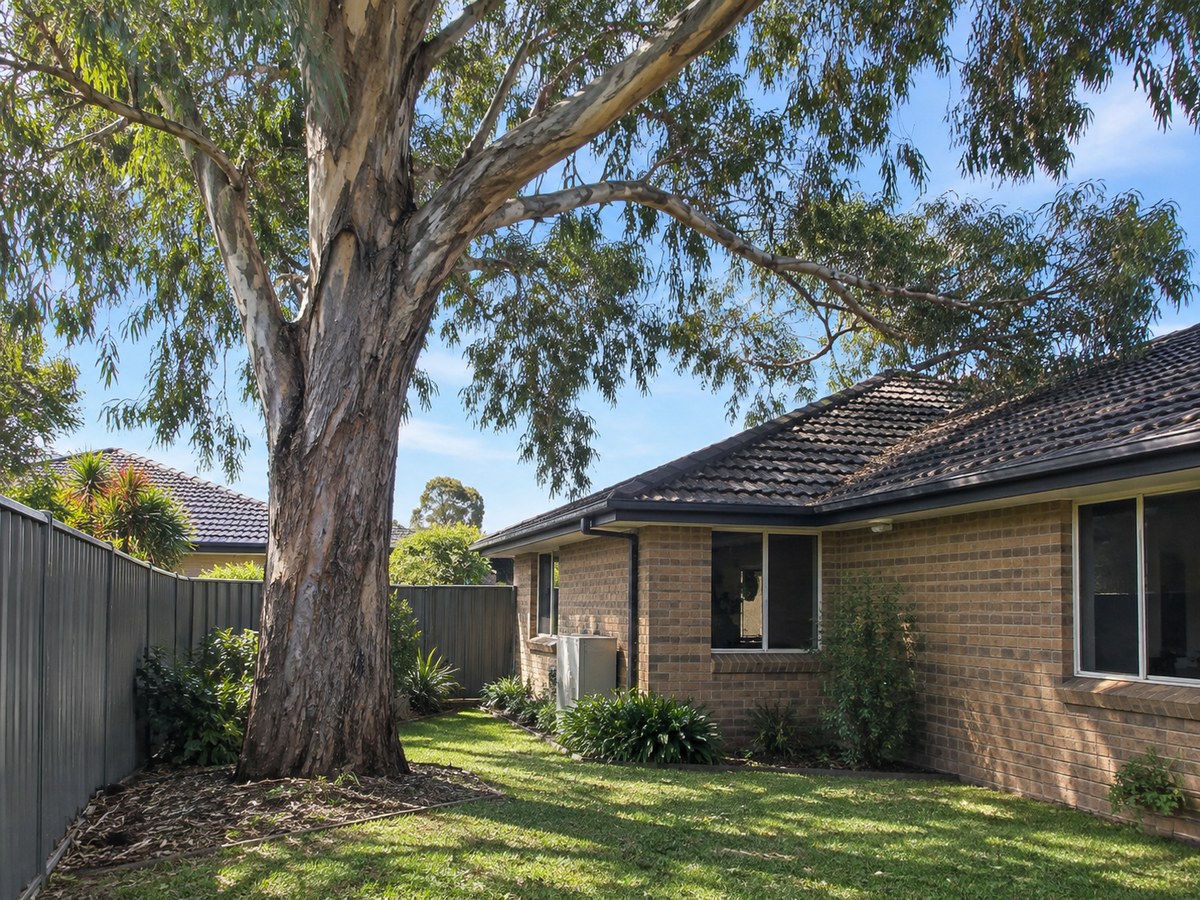
Is a Tree Within 3 Metres of My House Automatically Exempt?
No. Liverpool's Tree Policy states that Council will consider a Tree Permit for removal where the main supporting trunk or stem is within three metres of an approved dwelling, garage or in-ground swimming pool. This is a factor Council will consider when assessing a Tree Permit application. It is not an automatic exemption, and an application is still required.
Tree Removal Reports Liverpool
Does the NSW 10/50 Rule Apply in Liverpool?
Only in limited circumstances. Approval is not required for tree work permitted under the NSW Rural Fire Service 10/50 Code of Practice, but this only applies where the property is within a designated 10/50 vegetation entitlement clearing area and the work is carried out in accordance with the current Code and its stipulated conditions.
Not every Liverpool property has a 10/50 entitlement. Check whether your property is within a mapped 10/50 area before relying on this provision.
NSW Rural Fire Service, 10/50 Vegetation Clearing Entitlement
When Is a Tree Removal Permit Required?
Where a private tree meets Liverpool's Protected Tree definition and no exemption applies, approval should be obtained before removal, unless the tree is dead or presents an imminent risk of failure.
A removal application may require an Arborist Report for Tree Removal where the reason for removal depends on tree health, structural defects, root-related damage, or damage to structures. The level of evidence required depends on the tree and the reason removal is being requested.
What Does Council Consider When Assessing Tree Removal?
Council's approach is to protect and retain trees while allowing removal where it is appropriately justified. A decision is not reduced to a single factor such as leaf drop, shade or visible roots. Factors Council may consider include:
- tree health, vigour and structural integrity;
- damage to service pipelines or structures;
- target area and frequency of use;
- visual prominence and amenity;
- historical significance;
- habitat significance;
- practical alternatives to removal and their cost;
- whether effective pruning could address the issue instead; and
- whether the tree was planted by the current owner and was not required as a condition of development consent.
Council's Tree Policy also states that Tree Approvals are not intended simply to facilitate views, signage, off-street parking or solar panels, to minimise natural tree processes, or to address unsubstantiated property damage claims.
An AQF Level 5 Arborist Report for Tree Removal can document the tree's actual condition and provide an evidence-based recommendation before you lodge an application.
Dead Trees and Trees at Imminent Risk of Failure
You do not need approval to remove a tree, or part of a tree, that Council's Technical Guidelines define as dead or an imminent risk of failure. These are narrower exemptions than simply believing a tree is unsafe.
Dead tree: no longer capable of photosynthesis or normal growth, shown by permanent leaf loss, desiccated leaves, stems or roots, or obvious bark peeling. This does not apply where the tree died due to the owner's wilful or negligent damage.
Imminent risk of failure: failure has already started, or is extremely likely very soon, shown by obvious cracking or deformation of major parts, root plate lifting, or a significant new lean. Normal or minor branch shedding does not qualify.
Take clear photographs before removal in case evidence is needed later. For an immediate hazard, see Emergency Tree Removal Liverpool.
When Is an Arborist Report for Council or Tree Removal Required?
Not every removal needs the same level of documentation, and minor pruning within Council's thresholds needs none at all. Where Council requires a formal Tree Report, its Tree Policy states Council will only accept a report prepared by a suitably qualified Consultant Arborist, defined as holding an AQF Level 5, Diploma of Horticulture (Arboriculture).
An AQF Level 5 Arborist Report for Council or Tree Removal is particularly valuable where the reason for removal depends on professional assessment of health, structural condition, defects or risk. Our reports document tree identification, dimensions, health and structural condition, observable defects, photographic evidence, and a retention or removal recommendation with supporting arboricultural reasoning.
Liverpool Tree Pruning Rules
Pruning directly affects a tree's health, structure and viability, and all pruning work must be carried out in accordance with AS 4373-2007, Pruning of Amenity Trees, by a suitably qualified arborist.
Not every pruning job needs formal Council approval. Liverpool provides a minor-pruning exemption pathway, separate from the general power-line exemption described above.
What Pruning Can Be Done Without Council Approval?
Minor pruning is exempt from approval only where all of the following are met:
- removes no more than 5% of the tree's canopy, without damaging its health or structural stability;
- root pruning involves roots under 50mm diameter, not within 2.5m of the trunk, except roots within a stormwater drain or sewer line, which are exempt regardless of distance;
- branch removal within 0.5m of a domestic power or telecommunications line, branches only and not the trunk. This specific branch-size limit governs the minor-pruning pathway and is separate from the broader one-metre power-line pruning exemption described above;
- removal of deadwood, meaning completely dead branches still attached to the tree; and
- carried out to AS 4373-2007, by an arborist holding at least AQF Level 2 in Arboriculture.
Maximum Branch Size by Location
Pruning outside these minor-work exemptions may require Council approval. Where formal arboricultural evidence is required, Council's Tree Policy specifies AQF Level 5 Consultant Arborist qualifications.
| Situation | Maximum diameter |
|---|---|
| Clearance over a local street vehicle lane below 4.5m | 100mm |
| Clearance over a local street parking lane or pedestrian pathway below 2.5m | 100mm |
| Within 2m above an approved building | 50mm |
| Within 0.5m of a domestic power or telecommunications line | 50mm |
| Minor tree roots, not within 2.5m of the trunk | 50mm |
For pruning assessment and Council-ready pruning documentation, see Tree Pruning Reports Liverpool.
Trees Damaging Buildings, Driveways or Structures
Visible roots or suspected root damage do not automatically justify tree removal. The first step is establishing what is actually causing the damage. Evidence may be needed from an arborist, and in some cases a plumber or engineer. Root investigation can establish the relationship between a tree and nearby infrastructure with genuine accuracy, rather than an above-ground assumption.
For a new or modified driveway, Council may expect alternative design options to be considered before removal of a Council street tree is pursued.
Tree Root Investigation & Mapping
What If the Tree Is Being Removed for a Development?
Tree removal linked to a Development Application is assessed differently from a standalone removal application. Where removal forms part of a DA, tree retention value, Tree Protection Zone and Structural Root Zone impacts, and design alternatives generally need to be addressed through an Arboricultural Impact Assessment, not this guide's standalone exemptions. TPZ and SRZ assessment for a Development Application is generally undertaken with reference to the applicable edition of AS 4970, Protection of Trees on Development Sites.
Liverpool Development Tree Compliance Guide
How Do I Apply to Liverpool City Council?
For private-property tree works requiring approval, Liverpool City Council provides a Prune or Remove a Tree on Private Property application pathway. Before applying, confirm whether the tree is protected, whether an exemption applies, and whether supporting arboricultural evidence is required.
If you already have Council correspondence, send it with photographs of the tree and we can help identify whether an Arborist Report for Council, Arborist Report for Tree Removal or another assessment is appropriate.
What Happens If Tree Removal Is Approved?
Where removal is approved, Council may impose conditions such as replacement planting or other tree-management requirements.
Unauthorised removal, pruning or damage to a Protected Tree may result in enforcement action and significant penalties, including Penalty Infringement Notices or prosecution in the Local Court or the NSW Land and Environment Court.
Official Liverpool City Council information
This guide is based on Liverpool City Council's adopted Tree Policy and Tree Management Technical Guidelines, both adopted 10 December 2024. Requirements can change, so always confirm current, property-specific requirements directly with Council before undertaking regulated tree work.
Frequently Asked Questions
Can I prune branches overhanging my property from a neighbour's tree?
The tree may still be protected under Council's controls even where branches overhang your side of the boundary. Approval requirements depend on the extent of pruning proposed, not on which side of the fence the trunk sits.
What is the difference between this guide and the Development Tree Compliance Guide?
This page covers standalone tree removal and pruning: permits, exemptions and Council’s assessment of individual trees. The Development Tree Compliance Guide covers tree requirements specifically linked to a Development Application, including AIAs, TPZ and SRZ assessment and construction compliance.
Can I remove a tree that is a recognised weed species?
If the species appears on Liverpool's Exempt Species List, or is identified as a Priority Weed for the Liverpool LGA on NSW WeedWise, it is generally exempt from the standard Protected Tree controls on private land. This does not apply on heritage-listed properties or within a Heritage Conservation Area.
Is a tree within 3 metres of my house automatically exempt from approval?
No. Council will consider a Tree Permit for removal where the main trunk is within three metres of an approved dwelling, garage or in-ground pool, but this is a factor Council considers, not an automatic exemption. An application is still required.
Does the 10/50 rule mean I can clear vegetation anywhere in Liverpool?
No. The 10/50 Code only applies within a designated 10/50 vegetation entitlement clearing area, and only for work carried out in accordance with the current Code. Not every property in Liverpool has this entitlement.
Not Sure Which Arborist Report You Need?
Send us your plans, Council correspondence or photographs of the tree. Our AQF Level 5 Consulting Arborists can identify the appropriate assessment, explain the next step and provide a fixed quote before work begins.