
Not every storm-damaged tree needs removal
Where the remaining tree is structurally viable, appropriate pruning or other management may be possible after the immediate hazard has been addressed.
Tree Pruning LiverpoolOur Services
Areas We Service
24/7 emergency tree removal, dangerous tree assessments and make-safe services
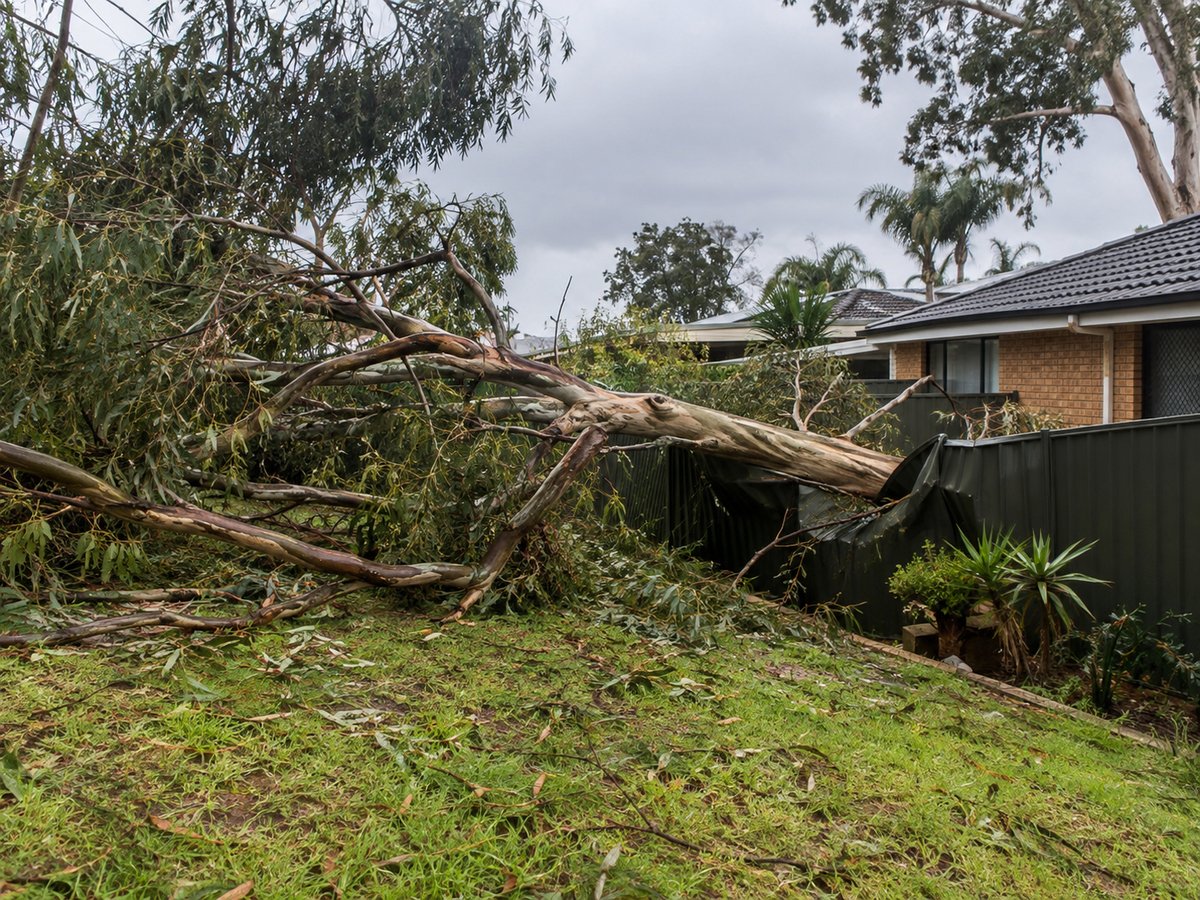
Fallen trees, storm damage and active structural failures can create immediate risks to people, buildings, vehicles and property. We assess the immediate situation, undertake appropriate make-safe work where required and document the tree and surrounding circumstances.
Emergency tree work may be appropriate where a tree or significant part of a tree has failed, is actively failing or presents an imminent risk to people or property.
This may include fallen trees, trees or major limbs on buildings, vehicles or structures, major storm damage, active trunk or branch failure, obvious cracking or pronounced deformation, root-plate movement, a sudden or significant new lean, major broken or hanging branches, or another condition indicating failure may occur in the very near future.
A tree that is declining, overhanging, leaning or simply causing concern is not automatically an emergency. Liverpool's Tree Management Technical Guidelines distinguish an imminent risk of failure from ordinary tree defects or occasional minor branch shedding.
Assess, make safe, document, resolve.
We assess the tree, observable failure, immediate hazard and surrounding site conditions to determine the appropriate response.
Where urgent work is required, the immediate priority is reducing the risk to people and property. This may involve removing a failed or hazardous part of the tree, stabilising the immediate situation or undertaking emergency removal where appropriate.
Photographs, site observations and arboricultural documentation can record the condition of the tree and circumstances requiring emergency work.
Once the immediate hazard has been addressed, we can advise on further tree work, Council requirements or ongoing management where necessary.
Liverpool's tree-management framework provides a specific pathway where a tree, or part of a tree, presents an imminent risk of failure to life or property. This is a higher threshold than simply considering a tree dangerous or unhealthy.
Liverpool's Tree Management Technical Guidelines identify indicators that can include obvious cracking, pronounced deformation of major branches or the trunk, noticeable root-plate movement, or a noticeable lean that was not previously present. The Guidelines distinguish these circumstances from normal or occasional minor branch shedding.
Where emergency work relies on an imminent-risk provision, the condition of the tree and circumstances surrounding the work should be documented. Where it is safe to do so, photographs should be taken before work begins. If the tree is concerning but does not meet the imminent-risk threshold, the normal tree assessment or approval pathway may still apply.
Strong winds, storms and saturated ground can contribute to sudden branch, stem or whole-tree failure. We provide emergency assistance for fallen trees, trees on houses or roofs, trees or limbs on vehicles, trees across driveways or accessways, major storm-damaged limbs, split or partially failed trees, hanging branches, root-plate failure and urgent make-safe work.
Where the remaining tree is structurally viable, appropriate pruning or other management may be possible after the immediate hazard has been addressed.
Tree Pruning LiverpoolWhere it is safe to do so, take photographs before emergency work begins. Photographs can help establish the tree's condition, the nature of the failure and any surrounding damage.
24/7 emergency tree response, fallen tree assessment and removal, storm-damaged tree work, dangerous tree assessment, emergency make-safe work, hazardous limb removal, tree dismantling where required, AQF Level 5 arboricultural documentation, post-storm tree assessment and advice on appropriate next steps.
Emergency circumstances can change quickly once failed branches or trees are removed. Photographic and arboricultural evidence can therefore be important where urgent work has been undertaken.
Depending on the circumstances, documentation may record the tree and site, observable structural defects, cracks, deformation or active failure, root-plate movement, storm damage, failed branches, stems or the entire tree, damage to buildings or property, photographs before work, arboricultural observations, and the reason emergency work was considered necessary.
Where required, our AQF Level 5 Consulting Arborists can prepare an Arborist Report or other arboricultural documentation recording the condition of the tree and the circumstances surrounding the emergency work.
There is an important difference between a tree requiring professional assessment and a tree requiring immediate emergency work. A tree may have decay, cavities, deadwood, structural defects, weak branch attachments or other concerns without presenting an imminent risk of failure.
Where there is no immediate danger, a planned Tree Health and Safety Assessment allows the tree to be properly assessed before deciding whether pruning, further investigation, monitoring or removal is appropriate. Where visual assessment does not provide sufficient information, specialist investigation such as QTRA tree-risk assessment or Resistograph testing may be appropriate. This prevents every concerning tree from being treated as an emergency simply to avoid the normal assessment or Council pathway.
Emergency failures can also occur on development and construction sites. A retained tree may be affected by excavation, root damage, construction activity, storms or an unexpected structural failure. Where a Project Arborist has been appointed, emergency tree management should be coordinated with the project's tree-protection requirements and applicable Development Consent conditions. Urgent assessment can establish the immediate risk and whether the tree can safely remain.
We provide emergency tree assistance throughout the Liverpool Local Government Area.
Liverpool CBD, Warwick Farm, Casula, Chipping Norton, Moorebank, Hammondville, Holsworthy, Wattle Grove, Voyager Point and Pleasure Point.
View areaAshcroft, Busby, Cartwright, Green Valley, Heckenberg, Hinchinbrook, Lurnea, Miller, Sadleir, Cecil Hills and Mount Pritchard.
View areaAustral, Edmondson Park, Leppington*, Denham Court*, Middleton Grange, West Hoxton, Carnes Hill, Horningsea Park, Prestons and Hoxton Park.
View areaBadgerys Creek, Bradfield, Bringelly*, Cecil Park*, Greendale, Kemps Creek*, Luddenham, Rossmore and Wallacia.
View area*Some suburbs extend across Liverpool and neighbouring council boundaries. Liverpool-specific requirements on this website apply only to properties within the Liverpool City Council LGA. We can confirm the applicable council from your property address.
Assistance for fallen, storm-damaged and immediately dangerous trees.
Professional assessment and arboricultural documentation where required.
Make-safe work, hazardous limb removal and emergency tree removal where appropriate.
Practical arboricultural and tree-removal experience.
Understanding of Liverpool's tree-management framework and imminent-risk provisions.
One coordinated pathway from emergency assessment and documentation through to appropriate tree work.
Liverpool's tree-management framework provides an exemption where a tree, or part of a tree, presents an imminent risk of failure to life or property. The threshold is higher than simply considering a tree dangerous, unhealthy or unstable. Where emergency work relies on this provision, evidence of the tree's condition and circumstances should be retained.
A fallen tree, active structural failure, major storm damage, root-plate movement, significant new lean, obvious cracking or another condition indicating imminent failure may require emergency response. A concerning tree that is not actively or imminently failing may instead require a planned Tree Health and Safety Assessment.
Yes, where it is safe to do so. Photographs can document the tree, structural failure, surrounding conditions and property damage before the evidence is altered by emergency work.
Yes. Where required, our AQF Level 5 Consulting Arborists can prepare an Arborist Report documenting the tree's condition, observable defects, failure and the arboricultural basis for emergency work.
No. The significance of a lean depends on the individual tree and circumstances. Liverpool's Technical Guidelines identify a noticeable lean that was not previously present as one possible indicator of imminent failure. An established lean without evidence of recent movement does not automatically establish an emergency.
Where a tree has defects or causes concern but is not actively failing or presenting an imminent risk, a planned Tree Health & Safety Assessment may be more appropriate.
Council requirements can change. This page provides general guidance. Confirm current and property-specific requirements with Liverpool City Council where circumstances allow.
Send us your plans, Council correspondence or photographs of the tree. Our AQF Level 5 Consulting Arborists can identify the appropriate assessment, explain the next step and provide a fixed quote before work begins.