AQF Level 5 Consulting Arborists across the Liverpool LGA
Liverpool Tree Permit Services
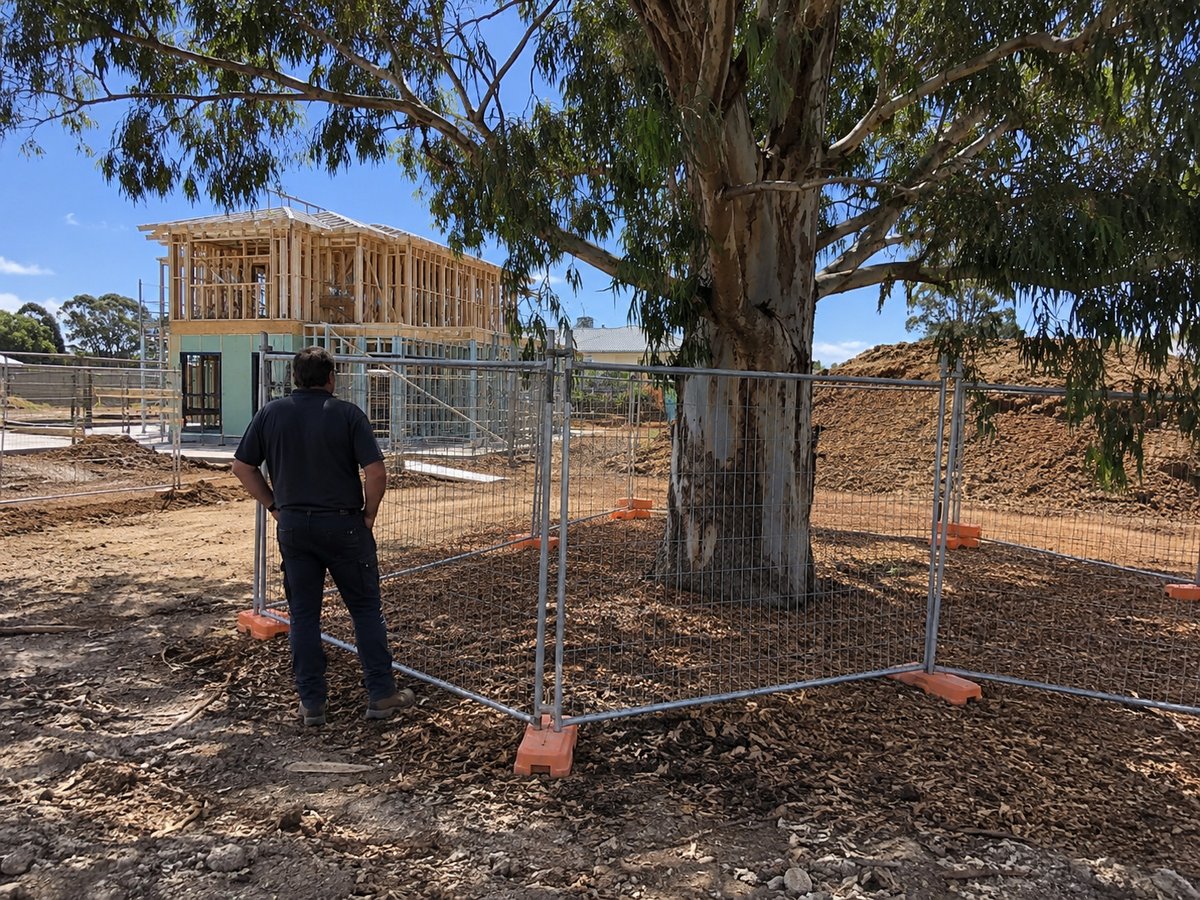
Project arborist inspecting a fenced tree protection zone beside a house under construction in Liverpool

Project Arborist Services Liverpool

Construction monitoring, hold-point inspections, compliance reporting and certification

A Project Arborist manages arboricultural requirements relating to retained trees during construction, from reviewing consent conditions through to final certification.

When Is a Project Arborist Required?

Where Development Consent conditions require arboricultural supervision, tree-protection inspections, excavation monitoring, construction-stage reporting or compliance certification relating to retained trees, a Project Arborist may be required.

Depending on the Development Consent, approved plans and arboricultural documentation, this may include reviewing arboricultural conditions of consent, inspecting tree-protection measures, monitoring works near retained trees, assessing unexpected impacts and preparing construction-stage records and certification.

Where Project Arborist involvement is required, appointment should occur before the first arboricultural condition or hold point is due. Common trigger points can occur before demolition, site establishment, installation of tree protection, excavation near retained trees or other construction activities identified in the Development Consent.

Project Arborist Workflow

Review, protect, monitor, manage, document, certify.

01

Review Development Consent

We review the approved plans, arboricultural reports and relevant tree conditions to identify the Project Arborist requirements, inspections and construction-stage hold points.

02

Establish tree protection

Tree-protection measures are inspected against the approved arboricultural documentation before relevant site works begin.

03

Monitor construction

Works near retained trees are monitored at the stages required by the consent, including excavation within or near a Tree Protection Zone.

04

Manage unexpected impacts

Where site conditions differ from approved plans or arboricultural assumptions, we assess the implications and advise the project team on the appropriate next step.

05

Document

Inspection records, photographic evidence and construction-stage reports are maintained as an arboricultural record of the work inspected.

06

Certify

Construction-stage reports and arboricultural certification are prepared where required by the Development Consent.

Construction Monitoring and Arboricultural Hold Points

Development Consent conditions can require Project Arborist involvement at specific stages of construction. Depending on the individual project, arboricultural hold points may occur before or during installation of tree-protection measures, demolition near retained trees, excavation within or near a Tree Protection Zone, footing or foundation excavation, driveway construction, installation of underground services, approved root pruning, changes to tree-protection measures, or final inspection of retained trees.

The required inspections depend on the Development Consent, approved plans and arboricultural documentation for the individual development. Our role is to attend the required stages, assess relevant tree impacts and maintain an arboricultural record of the work inspected. This is why the Development Consent should be reviewed before construction begins rather than waiting until an inspection or certification is requested.

Tree Protection During Construction

Construction can affect retained trees through excavation, soil compaction, root damage, machinery movement, material storage and changes within protected areas.

Project Arborist involvement may include monitoring Tree Protection Zones, Structural Root Zones, protective fencing, ground protection, trunk and branch protection, excavation near trees, machinery access, material storage, service installation and changes to approved protection measures. The Project Arborist checks the requirements applying to the particular development and identifies where tree protection needs to be maintained, adjusted or documented as construction progresses.

Excavation, Roots and Unexpected Impacts

Excavation near retained trees is one of the construction stages where Project Arborist involvement can be particularly important.

Where roots are encountered

The Project Arborist may assess root size and location, likely structural or physiological significance, relationship to the approved Tree Protection Zone, implications for the retained tree, whether work can proceed as approved, and whether further arboricultural investigation or management is required.

Tree Root Investigation & Mapping

Where conditions differ from plans

Unexpected impacts should be documented where site conditions differ from approved plans or arboricultural assumptions. The Project Arborist can assess the arboricultural implications and provide advice to the project team on the appropriate next step.

Where tree protection is breached

Issues can arise from unauthorised excavation, machinery entering protected areas, removal or movement of protective fencing, storage of building materials within protected areas, unexpected root exposure or damage, or construction activity differing from the approved plans. Where an issue is identified, we assess the tree and affected area, document the circumstances and recommend appropriate arboricultural measures. Early assessment is preferable to allowing further work to continue.

Compliance Reporting and Certification

Project Arborist documentation may be required during construction or at project completion. Depending on the Development Consent, documentation can include inspection records, photographic evidence, tree-protection inspection reports, excavation or root-monitoring records, documentation of unexpected impacts, recommendations for corrective measures, construction-stage compliance reports and final arboricultural certification where required.

Certification should reflect the inspections actually undertaken and the relevant requirements of the Development Consent and approved plans. If a consent condition requires inspection at a particular construction stage, it may not be possible to retrospectively verify work that was completed before the Project Arborist attended. Early appointment helps establish a clear arboricultural record from pre-construction through to completion.

Tree protection and construction-stage arboricultural management are undertaken with reference to Development Consent requirements, approved arboricultural documentation and the applicable edition of AS 4970, Protection of Trees on Development Sites.

Can the Same Arborist Continue From the AIA?

Yes. Wherever practicable, the same AQF Level 5 Consulting Arborist who prepares the Development Arborist Report, DA Arborist Report or Arboricultural Impact Assessment can continue as the Project Arborist during construction.

This provides continuity because the arborist is already familiar with the assessed trees, proposed development, retention recommendations, identified tree impacts, tree-protection requirements and the arboricultural reasoning behind the original recommendations. Where another arborist prepared the original AIA, we can still act as Project Arborist after reviewing the approved arboricultural documentation, Development Consent and relevant plans.

Project Arborist Services Throughout Liverpool

Our AQF Level 5 Consulting Arborists provide Project Arborist services throughout the Liverpool Local Government Area.

Liverpool CBD & Established Urban Area

Liverpool CBD, Warwick Farm, Casula, Chipping Norton, Moorebank, Hammondville, Holsworthy, Wattle Grove, Voyager Point and Pleasure Point.

View area

Established Residential Areas

Ashcroft, Busby, Cartwright, Green Valley, Heckenberg, Hinchinbrook, Lurnea, Miller, Sadleir, Cecil Hills and Mount Pritchard.

View area

South West Growth Area

Austral, Edmondson Park, Leppington*, Denham Court*, Middleton Grange, West Hoxton, Carnes Hill, Horningsea Park, Prestons and Hoxton Park.

View area

Western Sydney Aerotropolis & Rural Lands

Badgerys Creek, Bradfield, Bringelly*, Cecil Park*, Greendale, Kemps Creek*, Luddenham, Rossmore and Wallacia.

View area

*Some suburbs extend across Liverpool and neighbouring council boundaries. Liverpool-specific requirements on this website apply only to properties within the Liverpool City Council LGA. We can confirm the applicable council from your property address.

Why Choose Liverpool Tree Permit Services?

AQF Level 5 Consulting Arborists

Development and construction-stage arboricultural expertise.

Continuity From AIA to Construction

Wherever practicable, the same Consulting Arborist can continue from development assessment through construction.

Construction Compliance

Review of Development Consent conditions, required inspections, hold points, reporting and certification.

Tree Protection & Root Assessment

Practical arboricultural assessment where construction interacts with retained trees, Tree Protection Zones or roots.

Project Team Coordination

Clear arboricultural advice for builders, developers, architects, engineers and certifiers.

32+ Years' Arboricultural Experience

Practical experience across tree assessment, development and construction-stage arboriculture.

Frequently Asked Questions

When is a Project Arborist required?

A Project Arborist may be required where Development Consent conditions require arboricultural supervision, tree-protection inspections, excavation monitoring, construction-stage reporting or compliance certification relating to retained trees.

When should I appoint the Project Arborist?

Before the first required arboricultural hold point or tree-protection condition is due. This allows the Development Consent, approved plans and tree-protection requirements to be reviewed before relevant site works begin.

Can the same arborist prepare the AIA and supervise construction?

Yes. Wherever practicable, the same AQF Level 5 Consulting Arborist who prepares the Development Arborist Report, DA Arborist Report or AIA can continue as the Project Arborist.

What inspections does a Project Arborist undertake?

The inspections depend on the Development Consent. They may include tree-protection inspections, excavation and root monitoring, construction-stage hold points, assessment of unexpected tree impacts and final inspections of retained trees.

What happens if roots are found during excavation?

The Project Arborist can assess the exposed roots, their size and location, their significance to the retained tree and the relationship to the approved works. Where more detailed investigation is required, see Tree Root Investigation & Mapping Liverpool.

Can you provide compliance certification?

Yes. Where required, we prepare arboricultural compliance reports and certification relating to the relevant Development Consent conditions, approved plans and inspections undertaken.

Project-specific requirements should be confirmed against the applicable Development Consent, approved plans and current Liverpool City Council requirements.

Not Sure Which Arborist Report You Need?

Send us your plans, Council correspondence or photographs of the tree. Our AQF Level 5 Consulting Arborists can identify the appropriate assessment, explain the next step and provide a fixed quote before work begins.

Call Now Get a Free Quote