AQF Level 5 Consulting Arborists across the Liverpool LGA
Liverpool Tree Permit Services
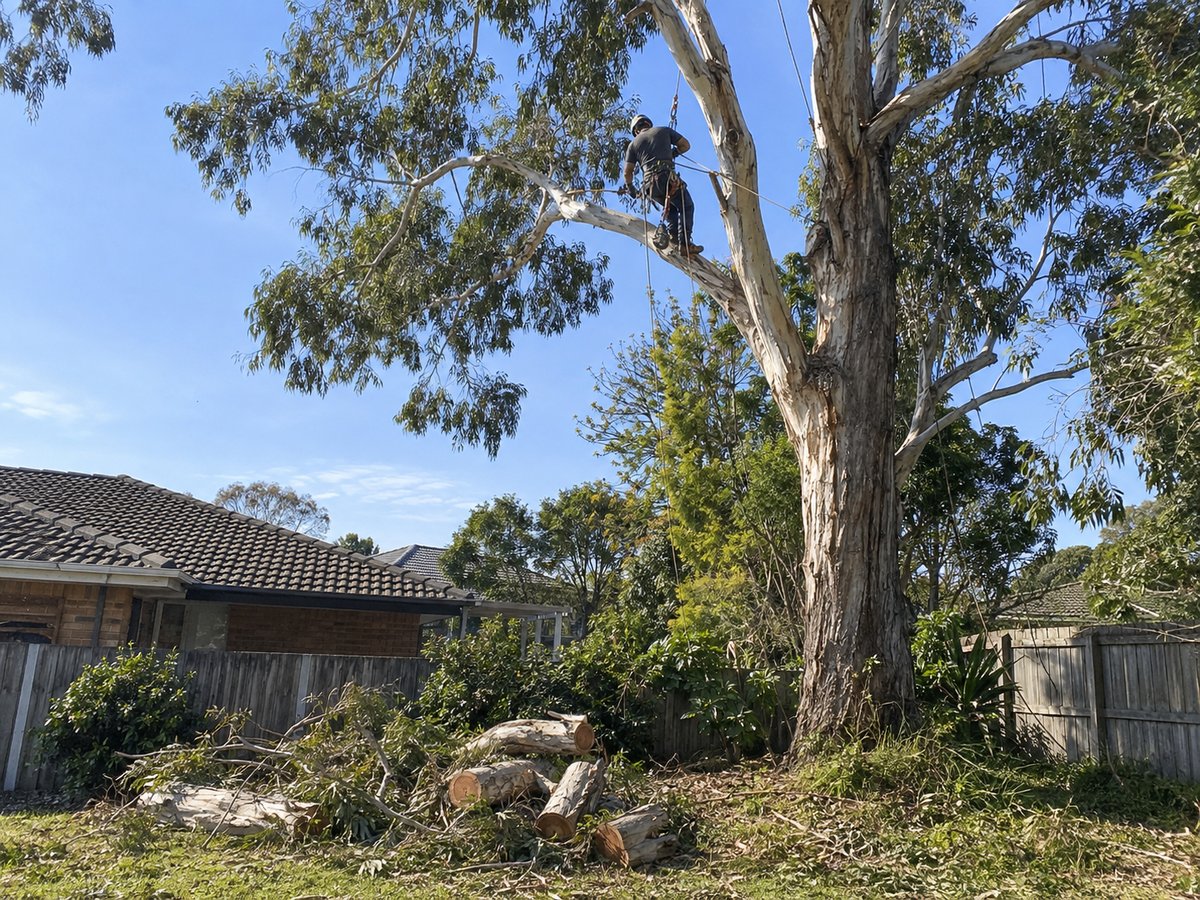
Arborist climbing a tall eucalyptus to remove it in sections behind a Liverpool home

Tree Removal Liverpool

AQF Level 5 assessment, Council permit support and professional tree removal

Tree removal assessment, Arborist Reports for Tree Removal, Council permit support and qualified professional removal throughout the Liverpool Local Government Area.

Need a Tree Removed in Liverpool?

Before removal, we establish whether the tree is protected under Liverpool City Council's tree controls, whether an exemption or other lawful pathway applies, and whether Council approval or supporting arboricultural evidence is required.

If you have simply been told you need a tree report, send us the Council request or photographs of the tree. We can establish what is required before you pay for unnecessary documentation.

Where professional evidence is required, our AQF Level 5 Consulting Arborists can assess the tree and prepare the supporting Arborist Report for Tree Removal. Once any necessary approval has been obtained, or an applicable lawful exemption has been established, professional tree removal can proceed.

Our Tree Removal Process

Check the pathway, report where required, approval where required, then removal.

01

Check the Council pathway

We assess the tree's species, dimensions, location, condition and site circumstances against the applicable Liverpool City Council requirements. Where an exemption or other lawful pathway applies, this can be identified before unnecessary documentation is prepared.

02

Arborist Report where required

Where professional arboricultural evidence is required, an AQF Level 5 Arborist Report for Tree Removal can document the tree's health, structural condition, relevant defects and evidence-based recommendations.

03

Council approval where required

Where a Tree Permit or other Council approval is necessary, the Arborist Report can provide supporting arboricultural evidence for the applicable pathway.

04

Tree removal

Once any necessary approval has been obtained, or an applicable lawful exemption has been established, our professional tree crews can undertake the tree removal.

Do I Need Council Approval to Remove a Tree in Liverpool?

Council approval is generally required before removing a Protected Tree on private land unless an applicable exemption or other lawful pathway applies. Under Liverpool City Council's Tree Policy, a woody perennial plant meets Council's tree definition where it satisfies at least one of the following:

  • greater than 5 metres in height;
  • trunk diameter of at least 140mm measured 1.4 metres above ground; or
  • canopy spread greater than 4 metres.

Liverpool's tree-management framework identifies specific circumstances where approval is not required for work to trees on private land. These include pruning branches within one metre of power lines, removing dead branches or an entire tree confirmed to meet Council's definition of dead, work to a tree listed in Council's exempt species list, and qualifying work under the NSW Rural Fire Service 10/50 Code within an applicable clearing area. A separate exemption applies where a tree presents an imminent risk of failure to life or property.

The applicable exemption or approval pathway should be established before removal proceeds.

What About the 3-Metre Provision?

Liverpool's 3-metre provision is not an automatic tree-removal exemption. Liverpool's Tree Policy states that Council will consider a Tree Permit for removal where the main supporting trunk or stem is within three metres of an approved dwelling, garage or in-ground swimming pool. This is a factor Council may consider when determining a Tree Permit application, not an exemption from needing one.

If your tree is within three metres of one of these structures, the applicable pathway should still be confirmed before removal.

When Is an Arborist Report for Tree Removal Needed?

Not every tree removal requires an Arborist Report. Professional arboricultural evidence may be appropriate where proposed removal involves tree health or significant decline, structural defects, decay or cavities, tree stability, previous branch or stem failures, root-related concerns, suspected damage to buildings or structures, safety concerns, suitability for retention, or Council requests for additional information.

What the report assesses

Tree identification and species, tree dimensions, health and vitality, structural condition, observable defects, decay or damage, site and target considerations, photographic evidence, retention or removal assessment, and arboricultural reasoning and recommendations.

Who can prepare it

Liverpool City Council's Tree Policy states Council will only accept a Tree Report prepared by a suitably qualified Consultant Arborist, defined as holding an AQF Level 5, Diploma of Horticulture (Arboriculture).

Where more evidence is needed

Where visual assessment alone does not provide sufficient evidence, specialist investigation may be appropriate, including QTRA tree-risk assessment, Resistograph investigation or non-destructive root investigation.

Tree Health & Safety Assessments

The documentation required depends on the tree, site conditions, reason for removal and applicable Council pathway.

How Does Liverpool City Council Assess Tree Removal?

Council considers more than inconvenience alone when assessing tree removal. Liverpool City Council's Tree Policy identifies a range of matters that may be considered, including:

  • damage to service pipelines or structures;
  • tree health, vigour and structural integrity;
  • target area and frequency of use;
  • visual prominence and amenity;
  • historical significance;
  • habitat significance;
  • practical alternatives to removal and their cost;
  • whether effective pruning could address the issue; and
  • whether the tree was planted by the current owner and was not required as a condition of development consent.

Liverpool's Tree Policy also states that Tree Approvals are not intended simply to facilitate views, signage, off-street parking or solar panels, to minimise natural tree processes, or to address unsubstantiated claims of property damage.

Where removal relies on tree health, structural condition, risk or property damage, professional evidence can document the actual condition and provide an arboricultural basis for the recommendation. Where a tree remains suitable for retention, pruning or another management option may instead be appropriate.

Dangerous, Dead or Storm-Damaged Trees

Two narrow exemptions apply, and both are more specific than a tree simply looking unsafe.

Dangerous or structurally compromised trees

Trees with significant decay, structural defects, previous failures, compromised attachments or root damage may require further assessment before the appropriate management response can be determined. Where visual assessment does not provide sufficient evidence, QTRA tree-risk assessment or Resistograph investigation may be appropriate.

Tree Health & Safety Assessments

Dead trees and dead branches

You do not require Council approval to remove a tree, or part of a tree, that meets Council's definition of dead: no longer capable of photosynthesis or ongoing normal growth, typically shown by permanent leaf loss, wilting or desiccation, or peeling bark. Confirming the tree genuinely meets that definition, rather than assuming it from appearance alone, is an important first step. Photographic evidence before removal is recommended.

Trees at imminent risk of failure

A separate exemption applies where a tree presents an imminent risk of failure to life or property, where failure has started or is highly likely in the very near future, typically shown by obvious cracking, pronounced deformation of major branches or the trunk, or a noticeable lean or root-plate movement that was not previously present. This is a higher bar than a tree simply looking unstable.

Immediate danger or storm damage

For fallen trees, active failures or trees presenting an immediate hazard, urgent assessment and make-safe work may be required.

Emergency Tree Removal Liverpool

Tree Roots Damaging Buildings or Structures

Visible roots near cracked paving, driveways, retaining walls, pipes or buildings do not necessarily establish that the tree caused the damage. Liverpool City Council may consider damage to service pipelines and structures when assessing a Tree Permit application, but the relationship between the tree and the damage should be supported by appropriate evidence.

Where root location needs to be established, non-destructive root investigation can identify significant roots and provide evidence for arboricultural, engineering or design decisions.

Tree Removal for a Development Application

Tree removal proposed as part of a Development Application follows a different pathway from standalone tree removal. Where trees may be affected by proposed development, their condition, retention value, Tree Protection Zone, Structural Root Zone and development impacts may need to be considered through a Development Arborist Report or Arboricultural Impact Assessment.

Professional Tree Removal After Approval

Once any required Council approval has been obtained, or an applicable lawful exemption or other pathway has been established, our tree crews can undertake the tree removal. Depending on the tree and site, work can include tree dismantling, confined-space removal, large-tree removal, hazardous-tree removal, storm-damaged tree removal and site clean-up.

Our Consulting Arborists and tree crews operate within the same service pathway, allowing the approved scope of work to progress from arboricultural assessment through to completion.
Tree Removal Throughout Liverpool

Tree removal assessment, Arborist Reports and professional removal across the whole Liverpool LGA. Larger rural and Aerotropolis sites can involve biodiversity, vegetation-clearing or other planning requirements beyond Council’s ordinary tree-management pathway.

Liverpool CBD & Established Urban Area

Liverpool CBD, Warwick Farm, Casula, Chipping Norton, Moorebank, Hammondville, Holsworthy, Wattle Grove, Voyager Point and Pleasure Point.

View area

Established Residential Areas

Ashcroft, Busby, Cartwright, Green Valley, Heckenberg, Hinchinbrook, Lurnea, Miller, Sadleir, Cecil Hills and Mount Pritchard.

View area

South West Growth Area

Austral, Edmondson Park, Leppington*, Denham Court*, Middleton Grange, West Hoxton, Carnes Hill, Horningsea Park, Prestons and Hoxton Park.

View area

Western Sydney Aerotropolis & Rural Lands

Badgerys Creek, Bradfield, Bringelly*, Cecil Park*, Greendale, Kemps Creek*, Luddenham, Rossmore and Wallacia.

View area

*Some suburbs extend across Liverpool and neighbouring council boundaries. Liverpool-specific requirements on this website apply only to properties within the Liverpool City Council LGA. We can confirm the applicable council from your property address.

Why Choose Liverpool Tree Permit Services?

AQF Level 5 Consulting Arborists

Council-ready tree assessment and Arborist Reports where required.

32+ Years' Arboricultural Experience

Practical experience across tree assessment, risk and tree management.

Professional Tree Removal

Assessment and tree work through one coordinated service.

Council Permit Support

We establish the appropriate Liverpool City Council pathway before removal proceeds.

Tree Risk & Specialist Investigation

QTRA tree-risk assessment, Resistograph investigation and AirSpade root investigation where appropriate.

Council Pathway First

Not every tree requires an Arborist Report. We establish what is actually required before recommending unnecessary documentation.

Real Liverpool tree-removal matters can demonstrate how tree condition, Council requirements and supporting arboricultural evidence affect the appropriate pathway. View Liverpool Arborist Report and tree removal case studies.

Frequently Asked Questions

Do I need Council approval to remove a tree in Liverpool?

Council approval is generally required before removing a Protected Tree unless an applicable exemption or other lawful pathway applies.

What trees are covered by Liverpool City Council's tree definition?

A woody perennial plant meets Council's tree definition where it is greater than 5 metres tall, has a trunk diameter of at least 140mm measured at 1.4 metres above ground, or has a canopy spread greater than 4 metres. Meeting any one threshold is sufficient.

Is a tree within 3 metres of my house automatically exempt?

No. Liverpool's Tree Policy states Council will consider a Tree Permit where the main supporting trunk or stem is within three metres of an approved dwelling, garage or in-ground swimming pool. It is a permit consideration rather than an automatic exemption.

Do I need an Arborist Report for Tree Removal?

Not every tree removal requires one. Where formal supporting arboricultural evidence is required, Liverpool City Council's Tree Policy states accepted Tree Reports must be prepared by a suitably qualified Consultant Arborist. Our Arborist Reports for Tree Removal are prepared by AQF Level 5 Consulting Arborists.

Can you prepare the report and remove the tree?

Yes. Liverpool Tree Permit Services provides AQF Level 5 Arborist Reports and professional tree removal through one coordinated service.

Can I remove a dead tree without Council approval?

You do not need approval to remove a tree, or part of a tree, that genuinely meets Council's definition of dead. Confirm the tree meets that definition rather than assuming it from appearance, and keep photographic evidence before removal.

What if my tree is dangerous right now?

If a tree has fallen, is actively failing or presents an immediate danger, urgent assessment and make-safe work may be required. See Emergency Tree Removal Liverpool.

What if tree roots are damaging my house, driveway or pipes?

The relationship between the tree and the damage should be established rather than assumed. Arboricultural assessment, root investigation or evidence from another relevant professional may be appropriate.

How much does a Tree Removal Report cost?

Tree Removal Reports typically range from $450 to $900+. The final cost depends on the number of trees, site complexity and assessment required. We provide a fixed quote before work begins. Tree removal work is quoted separately according to tree size, location, access and complexity.

Council requirements can change. This page provides general guidance. Confirm current and property-specific requirements with Liverpool City Council or arrange an assessment before undertaking regulated tree work.

Not Sure Which Arborist Report You Need?

Send us your plans, Council correspondence or photographs of the tree. Our AQF Level 5 Consulting Arborists can identify the appropriate assessment, explain the next step and provide a fixed quote before work begins.

Call Now Get a Free Quote