
Tree survey and condition
Tree survey and identification, tree health and structural condition, and tree retention value.
Our Services
Areas We Service
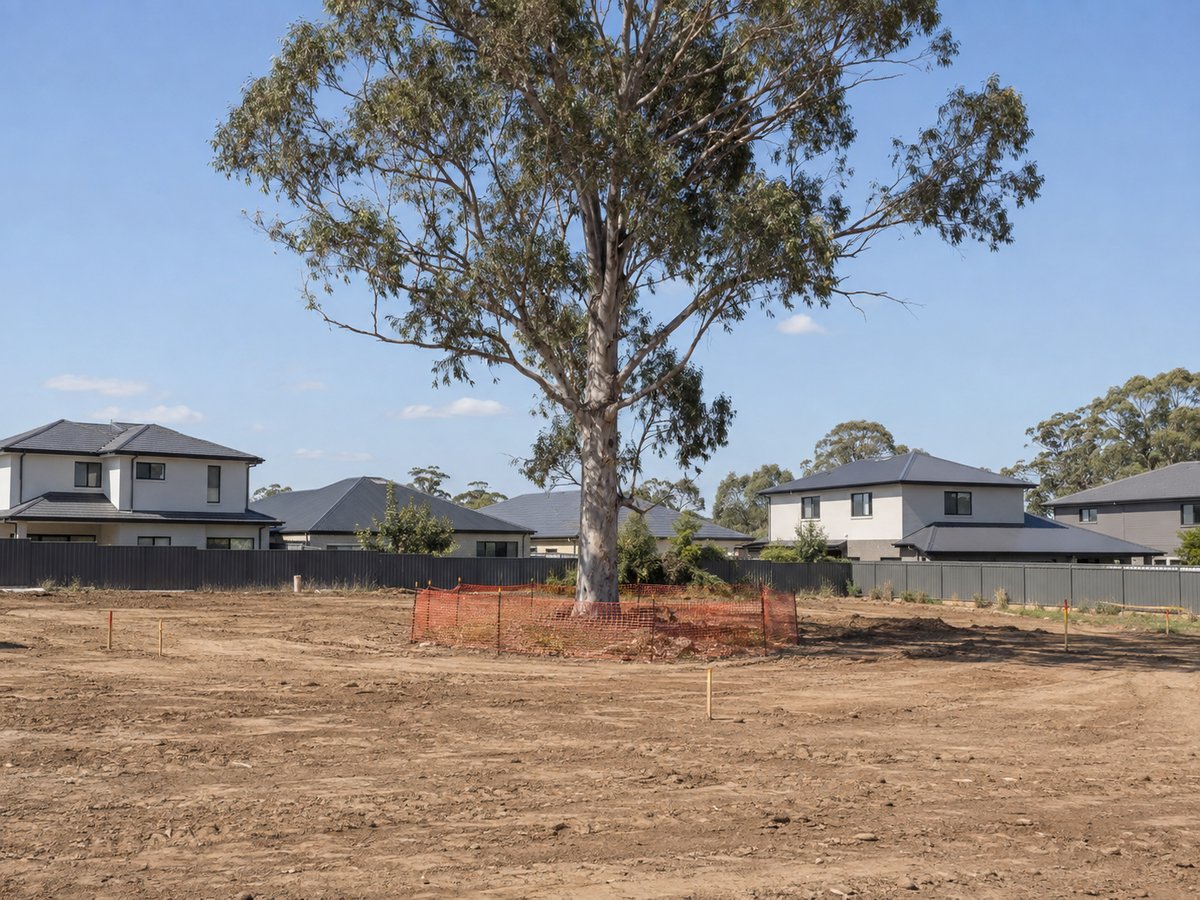
DA Arborist Reports, DA Tree Reports and Arboricultural Impact Assessments for Liverpool developments
Council-ready arboricultural documentation for residential, commercial, industrial and infrastructure developments throughout the Liverpool Local Government Area.
Where proposed development may affect existing trees, Liverpool City Council may require arboricultural information to assess tree condition, retention, development impacts and appropriate protection measures. Liverpool's Tree Policy seeks to ensure Development Applications contain the information necessary for Council to assess potential impacts on Protected Trees, including Tree Reports.
Our AQF Level 5 Consulting Arborists work with homeowners, architects, builders, developers, engineers, town planners and certifiers from early design through Development Application assessment and construction compliance.
An Arborist Report for a Development Application may be required where:
Trees do not necessarily need to be located within your property to be relevant. Trees on neighbouring land or public land may also need consideration where their protection areas interact with the proposed works.
An AIA evaluates how proposed development may affect existing trees and how suitable trees can be retained and protected. Depending on the site and proposal, an AIA may address:
Tree survey and identification, tree health and structural condition, and tree retention value.
Tree Protection Zones, Structural Root Zones and encroachments into tree-protection areas.
Proposed development impacts, tree retention or removal recommendations and pruning requirements.
Tree-protection measures, further investigation where required, and replacement planting recommendations where applicable.
The AIA brings the trees and proposed development together in one assessment, giving Council and the project team professional arboricultural information about the potential impacts of the proposal.
Liverpool City Council's Tree Policy states that Council will only accept a Tree Report prepared by a suitably qualified Consultant Arborist. Council defines a Consultant Arborist as a professional in the practice of arboriculture holding an AQF Level 5, Diploma of Horticulture (Arboriculture). Liverpool's Tree Management Technical Guidelines add that a report is normally reviewed and assessed by a Council officer holding the same qualification.
The arboricultural information required for a particular development therefore depends on the property, trees, proposed works and applicable planning controls.
Liverpool City Council, Development Control Plans (official source)
Ideally, before the development design is completely finalised. Early arboricultural assessment can identify trees suitable for retention, tree constraints affecting the proposed design, TPZ and SRZ considerations, building and driveway conflicts, excavation or basement constraints, service conflicts, potential root-investigation requirements and likely tree-removal issues.
This gives architects, engineers and developers an opportunity to consider tree constraints while the design can still be adjusted. For sites containing significant trees or several retained trees, early arborist involvement can reduce unnecessary redesign and Requests for Information later in the Development Application process.
Assess, report, protect, investigate, monitor, certify.
Survey relevant trees and identify their condition, retention value and relationship with the proposed development.
Prepare the Development Arborist Report, DA Arborist Report or Arboricultural Impact Assessment against the proposed plans.
Establish appropriate protection requirements for retained trees.
Where design conflicts occur close to retained trees, further root investigation may be required.
Provide Project Arborist inspections or supervision where required during construction.
Prepare arboricultural compliance documentation where required by Development Consent.
Tree Protection Zones and Structural Root Zones are important when proposed development occurs close to retained trees. A Tree Protection Zone identifies an area associated with protecting the tree and its growing environment during development. A Structural Root Zone relates particularly to the area important for tree stability.
An AIA assesses how proposed buildings, excavation, retaining walls, driveways, services and other works interact with these areas. Where a proposed design creates a potential conflict, further assessment or investigation may be required.
Development Consent may include conditions relating to retained trees. Depending on the project, these can require tree-protection measures, arborist inspections, supervision of specified works or compliance documentation during construction. Where required, we can continue as the Project Arborist so that the arboricultural recommendations made during assessment are carried through construction.
Not necessarily. Liverpool's Tree Policy states that the Tree Policy, Tree Management Strategy and Tree Management Technical Guidelines do not cover broad-scale land clearing matters or vegetation that does not meet Council's definition of a Protected Tree. Other legislation may apply separately, including the Biodiversity Conservation Act 2016.
This distinction can be particularly relevant to larger development sites, subdivisions, rural properties, growth-area land and Western Sydney Aerotropolis sites. A Development Arborist Report addresses the arboricultural matters relevant to the trees being assessed. Separate ecological, biodiversity or vegetation-clearing requirements may apply to the project.
Development Arborist Reports and AIAs across the whole Liverpool Local Government Area.
Liverpool CBD, Warwick Farm, Casula, Chipping Norton, Moorebank, Hammondville, Holsworthy, Wattle Grove, Voyager Point and Pleasure Point.
View areaAshcroft, Busby, Cartwright, Green Valley, Heckenberg, Hinchinbrook, Lurnea, Miller, Sadleir, Cecil Hills and Mount Pritchard.
View areaAustral, Edmondson Park, Leppington*, Denham Court*, Middleton Grange, West Hoxton, Carnes Hill, Horningsea Park, Prestons and Hoxton Park.
View areaBadgerys Creek, Bradfield, Bringelly*, Cecil Park*, Greendale, Kemps Creek*, Luddenham, Rossmore and Wallacia.
View area*Some suburbs extend across Liverpool and neighbouring council boundaries. Liverpool-specific requirements on this website apply only to properties within the Liverpool City Council LGA. We can confirm the applicable council from your property address.
Council-ready development arboricultural reporting.
Practical arboricultural and development consulting experience.
Residential, commercial, industrial, subdivision and infrastructure projects.
Reports prepared with reference to Liverpool's planning framework and applicable arboricultural standards.
AirSpade root investigation and mapping where additional evidence is required.
Tree Protection Plans, Project Arborist inspections and construction compliance where required.
We can liaise directly with your architect, engineer, town planner or certifier. See real Liverpool AIAs in the Liverpool Arborist Report Case Studies.
No. An Arborist Report may be required where proposed development may affect existing trees on, adjoining or near the site, or where Liverpool City Council requests arboricultural information.
Development Arborist Report, DA Arborist Report and DA Tree Report are terms people may use when seeking arboricultural documentation for a Development Application. Where the purpose is to assess how proposed development may affect existing trees, the required report may be prepared as an Arboricultural Impact Assessment.
Liverpool's Tree Policy states Council will only accept a Tree Report prepared by a suitably qualified Consultant Arborist, defined as holding an AQF Level 5, Diploma of Horticulture (Arboriculture).
Yes. Trees on adjoining properties may have Tree Protection Zones or root systems extending into the development site and may need to be assessed where proposed works could affect them.
Ideally before the development design is completely finalised, particularly where existing trees may influence buildings, excavation, driveways or services.
Send us the Request for Information and your current plans. We can identify the arboricultural assessment required.
Yes. Where required, we can provide Tree Protection Plans, root investigation, Project Arborist inspections and arboricultural compliance documentation.
Development Arborist Reports and Arboricultural Impact Assessments start from $900+, depending on the number of trees, project complexity, available plans and Council requirements. We provide a fixed quote before work begins.
Council requirements can change. Confirm current and property-specific requirements with Liverpool City Council and other relevant authorities before undertaking regulated works.
Send us your plans, Council correspondence or photographs of the tree. Our AQF Level 5 Consulting Arborists can identify the appropriate assessment, explain the next step and provide a fixed quote before work begins.