AQF Level 5 Consulting Arborists across the Liverpool LGA
Liverpool Tree Permit Services
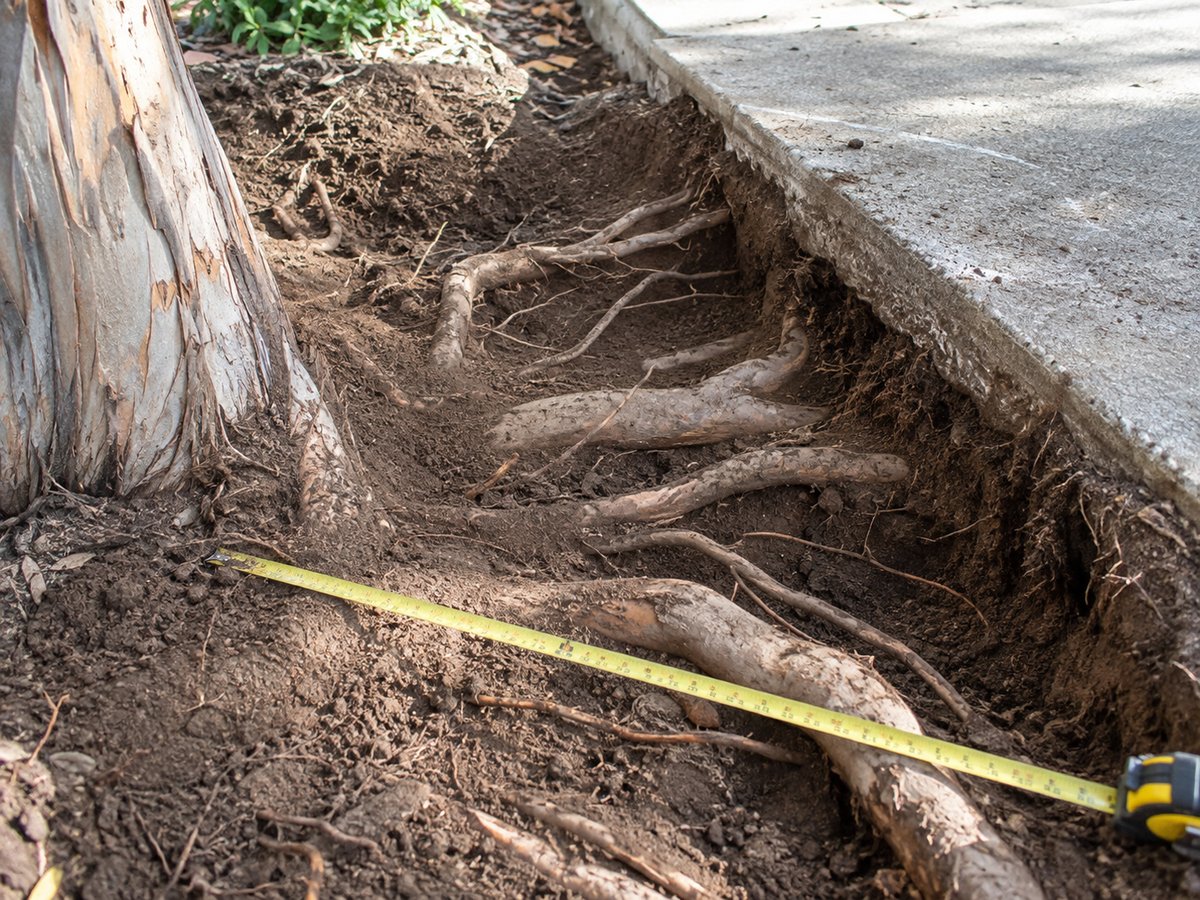
Tree roots exposed by non-destructive investigation beside a concrete driveway in Liverpool

Tree Root Investigation & Mapping Liverpool

Non-destructive AirSpade investigation and CAD root mapping for development and existing structures

Physical root evidence where excavation, footings, driveways or services interact with a Tree Protection Zone or Structural Root Zone, rather than an above-ground assumption.

What Root Investigation Establishes

Our investigations use non-destructive excavation methods where appropriate to expose roots while minimising unnecessary damage, consistent with AS 4970-2025, Protection of Trees on Development Sites.

Depending on the purpose and scope of the investigation, we may record root location, root diameter, root depth, root distribution, significant structural roots, distance from the tree, relationship to proposed excavation or construction, and relevant Tree Protection Zone or Structural Root Zone considerations.

Exposed roots can be measured and photographed before the investigation area is reinstated or managed in accordance with the project requirements.

Investigation Workflow

Site investigation, AirSpade where required, root measurement and mapping, arboricultural assessment, design integration.

01

AirSpade investigation

An AirSpade uses compressed air to remove soil from around tree roots, allowing roots to be exposed without relying on conventional mechanical excavation through the investigation area. The investigation is targeted to the question that needs to be answered rather than unnecessarily excavating the entire root system.

02

Root measurement

Exposed roots are measured and photographed, establishing whether roots are present, where significant roots are located, their approximate diameter and depth, and whether roots extend through a proposed excavation area.

03

CAD mapping

Significant exposed roots can be mapped in relation to building footprints, footings, driveways, retaining walls, swimming pools, services, excavation areas and other proposed works.

04

Design review

Architects, engineers and other project consultants can then consider actual root information when reviewing the design.

What Does a Root Mapping Report Document?

Where Liverpool City Council or a project team requires direct root evidence, root mapping reports are prepared to Council's specific minimum content expectations, including:

  • a scaled plan showing trench location relative to the subject tree and nearby structures, together with the Tree Protection Zone and Structural Root Zone;
  • trench details, including orientation, length, depth and any impediments encountered in reaching the required depth, with clear photographs of the trench and any roots found;
  • root information for every root greater than 25mm in diameter, including its location, size and orientation; and
  • discussion and recommendations evaluating the impact of proposed works on the tree, ways to mitigate that impact, and alternative or tree-sensitive design options where relevant.

Where a development's impact assessment needs to classify Tree Protection Zone or Structural Root Zone encroachment, Council expects this stated as a specific percentage and classified as minor or major, with mitigation options addressed directly for any major encroachment. Root investigation is often what makes that classification possible with genuine accuracy, rather than an above-ground estimate.

Where Root Investigation Is Used

The investigation does not replace the broader Development Arborist Report or Arboricultural Impact Assessment. It provides additional physical evidence where root location or significance needs to be better understood.

Root investigation for development

Root investigation may support Development Arborist Reports, DA Arborist Reports and Arboricultural Impact Assessments, Development Applications, design review, footing and engineering decisions, excavation planning, service alignments, Tree Protection Plans and alternative construction options.

Driveways, buildings and infrastructure

Where tree roots are suspected of interacting with driveways and paving, retaining walls, drainage, sewer or stormwater infrastructure, lightweight structures or existing footings. Visible cracking, displacement or lifting does not by itself establish that a particular tree or root system is responsible. Where structural movement, footing performance or soil behaviour needs to be determined, assessment by an appropriately qualified engineer may also be required.

Tree Removal Liverpool

Root pruning near retained trees

Roots should not automatically be cut because they conflict with proposed construction. Removing significant roots can affect tree health and, depending on their location and function, may affect tree stability. Where root pruning forms part of approved construction works, Project Arborist supervision may also be required.

Project Arborist Services

What Happens When Significant Roots Are Found?

Finding roots does not automatically mean a development cannot proceed. The significance of the findings depends on factors such as root size, location, distribution, the tree being assessed and the proposed construction.

Root information may allow the project team to consider options such as repositioning part of the proposed works, modifying footing design, redirecting underground services, adjusting excavation or considering alternative construction methods. The objective is to provide evidence that can inform the design decision rather than discovering significant roots after excavation has already begun.

When Should Root Investigation Be Undertaken?

For development projects, root investigation is most useful before important design and excavation decisions are finalised. Early investigation can allow actual root information to influence the building footprint, footing system, service alignment or construction methodology.

Root investigation can also occur during construction where unexpected roots are encountered, although establishing the information earlier can provide greater opportunity to respond through design.

Tree Root Investigation Throughout Liverpool

We provide Tree Root Investigation and Mapping throughout the Liverpool Local Government Area.

Liverpool CBD & Established Urban Area

Liverpool CBD, Warwick Farm, Casula, Chipping Norton, Moorebank, Hammondville, Holsworthy, Wattle Grove, Voyager Point and Pleasure Point.

View area

Established Residential Areas

Ashcroft, Busby, Cartwright, Green Valley, Heckenberg, Hinchinbrook, Lurnea, Miller, Sadleir, Cecil Hills and Mount Pritchard.

View area

South West Growth Area

Austral, Edmondson Park, Leppington*, Denham Court*, Middleton Grange, West Hoxton, Carnes Hill, Horningsea Park, Prestons and Hoxton Park.

View area

Western Sydney Aerotropolis & Rural Lands

Badgerys Creek, Bradfield, Bringelly*, Cecil Park*, Greendale, Kemps Creek*, Luddenham, Rossmore and Wallacia.

View area

*Some suburbs extend across Liverpool and neighbouring council boundaries. Liverpool-specific requirements on this website apply only to properties within the Liverpool City Council LGA. We can confirm the applicable council from your property address.

Why Choose Liverpool Tree Permit Services?

AQF Level 5 Consulting Arborists

Development-focused root assessment and reporting.

AirSpade Root Investigation

Non-destructive root exposure where physical investigation is required.

CAD Root Mapping

Significant root locations mapped in relation to development plans.

Physical Evidence

Establishing where significant roots actually occur rather than relying solely on assumptions.

Development & Design Coordination

Practical information for architects, engineers, builders and other project consultants.

32+ Years' Arboricultural Experience

Practical arboricultural assessment and development experience.

Frequently Asked Questions

When is a Tree Root Investigation needed?

Root investigation may be appropriate where proposed excavation, construction or an existing structure interacts with a tree's root zone and the location or significance of roots needs to be established.

Can you locate tree roots without damaging them?

AirSpade excavation uses compressed air to expose roots while minimising unnecessary damage associated with conventional mechanical excavation.

What information can root investigation provide?

Depending on the investigation, it can establish root location, diameter, depth and distribution and show how significant roots relate to proposed works.

What size roots does a root mapping report need to document?

Council's minimum content expectations for a root mapping report require the location, size and orientation of every root greater than 25mm in diameter. Smaller roots generally are not individually documented.

Can root investigation help retain a tree?

It can. Physical root information may allow architects and engineers to consider changes to building location, footings, services or excavation methods while retaining the tree.

Can you determine whether roots are affecting my driveway or building?

Root investigation can establish whether tree roots are physically present in the affected area and their relationship to the structure. Where the cause of structural movement or soil behaviour needs to be determined, engineering or other specialist assessment may also be required.

Can you map the roots onto our development plans?

Yes. Where required, significant root locations can be incorporated into architectural, engineering or survey information to assist design and development assessment.

Project-specific requirements should be confirmed against the applicable Development Consent, approved plans and current Liverpool City Council requirements.

Not Sure Which Arborist Report You Need?

Send us your plans, Council correspondence or photographs of the tree. Our AQF Level 5 Consulting Arborists can identify the appropriate assessment, explain the next step and provide a fixed quote before work begins.

Call Now Get a Free Quote